
Natural-disaster home insurance is straining: the key questions homeowners and policymakers must confront
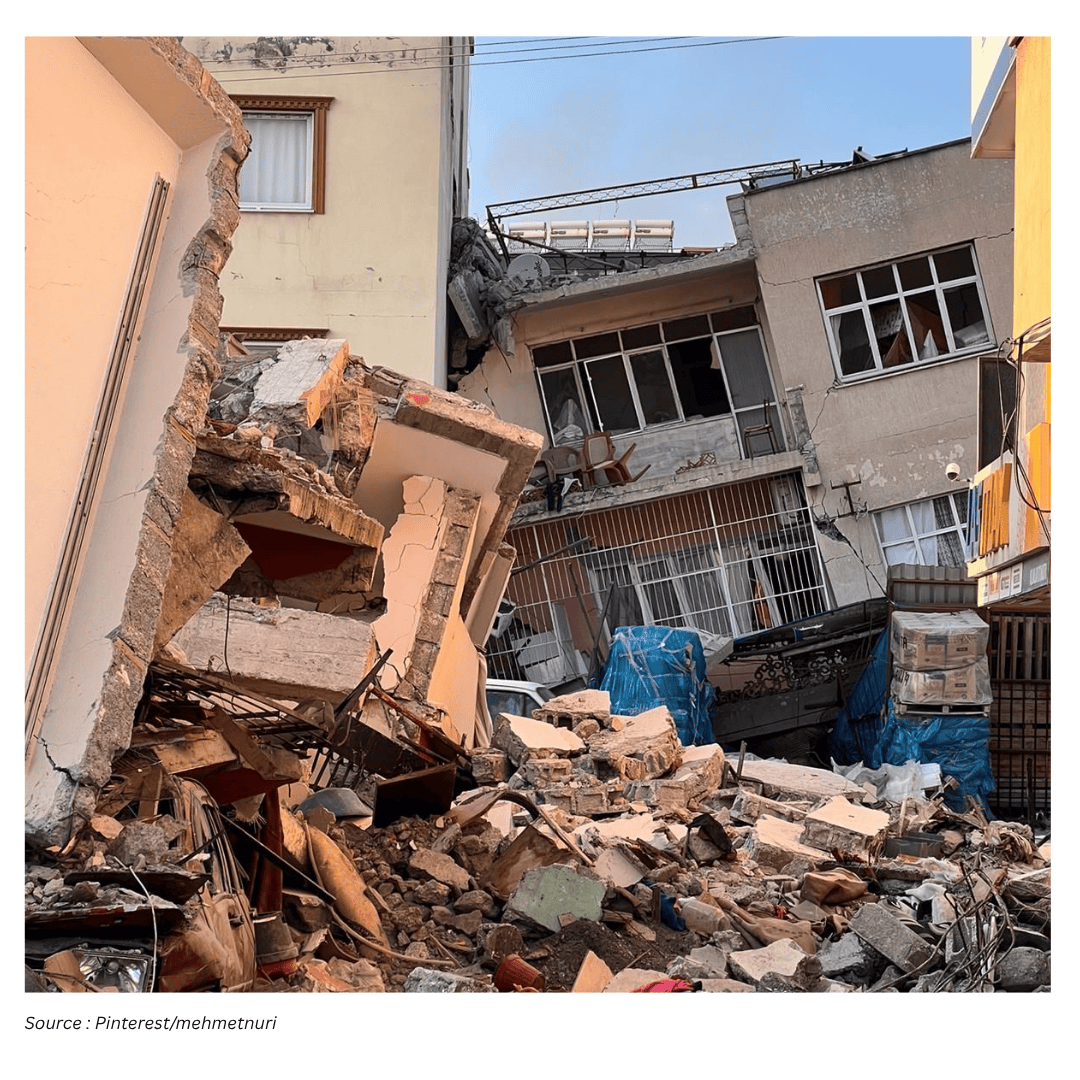
A widening gap between disaster risk and homeowners insurance
Wildfires that have devastated large parts of Los Angeles County have renewed attention on a problem that has been building for years: many Americans are struggling to insure their homes against natural disasters. The pressure is especially visible in states considered vulnerable to catastrophes. Since 2022, seven of the 12 largest insurance companies have stopped issuing new homeowners policies in California, pointing to increasing risks associated with climate change. Similar pullbacks have occurred in other high-risk states, including Louisiana and Florida.
At the same time, the share of Americans without home insurance has increased—from 5% to 12% since 2019. For those who do still have coverage, the price has been rising. Premiums in California, as elsewhere, have increased dramatically over the past five years. Together, these trends reflect a basic tension: as catastrophes become more common and more costly, the traditional model of private insurance becomes harder to sustain in places where losses are frequent and severe.
When private insurance retreats, government backstops step in—sometimes uneasily
In the United States, when the private market cannot or will not provide coverage at scale, government often fills part of the gap. Flood insurance is a long-standing example. Private insurers historically excluded flood coverage so broadly that a federal program was created in the 1960s to address the market’s absence. That program, the National Flood Insurance Program, remains a central pillar of flood coverage today.
States have also created “insurers of last resort” to provide at least some coverage when homeowners cannot obtain it privately. In California, the California FAIR Plan serves more than 450,000 residents and is a typical example of such a state-created option. Similar programs exist in many states. These plans generally offer limited coverage, but they can be a lifeline for homeowners who otherwise face going without insurance entirely.
Yet public programs face their own constraints. The scale of need can be so large that it becomes difficult for these systems to remain financially stable. It is not inconceivable that recent wildfires could exceed the reserves and reinsurance available to the California FAIR Plan. Because of how the plan is structured, a shortfall would force other insurers—and ultimately homeowners—to make up the difference. In other words, when a public backstop is stressed, the costs do not disappear; they are redistributed.
Why the “obvious” problem statement can mislead
It is tempting to summarize the situation in a single sentence: homeowners need coverage they cannot afford in the private market. But that framing can miss a critical point. Some homes in disaster-prone areas are simply too risky to insure on ordinary terms. If a property is subject to repeated losses—such as a home in a coastal area that floods again and again—an insurer faces an uncomfortable question: what premium would be high enough to reflect the expected losses?
In cases of repeated damage, there is an argument that it makes more economic sense to buy and demolish a property rather than continue to insure it. That reality complicates any discussion of “affordability,” because affordability is not only about household budgets; it is also about whether the underlying risk can be pooled in a way that remains viable.
Defining the problem carefully is not a technical exercise. It clarifies the values at stake and forces a more honest conversation about what insurance can and cannot do. It also highlights the trade-offs embedded in any proposal to expand coverage, limit premiums, or spread costs more broadly.
Insurance is not just financial—it embodies public values
Insurance is often described as a financial product that allows people to share risk. In that basic model, if catastrophe strikes one person, they do not bear the full cost alone. But insurance also reflects public policy goals and value judgments, whether consumers notice them or not. Every insurance system—private, public, or mixed—makes choices about whose losses will be spread, how much will be paid, and what behavior will be encouraged or discouraged.
Those choices can involve social, political, and even moral trade-offs. A society can choose to emphasize individual responsibility, leaning toward a system where each policyholder pays in proportion to the risk they bring. Or it can choose to emphasize collective responsibility, spreading costs more broadly to ensure wider protection. In practice, public policy on disaster losses often sits between these poles.
Competing values: protecting homeowners vs. pricing risk accurately
One value frequently invoked in disaster insurance debates is protecting the investments of current homeowners—particularly long-time residents, including elderly homeowners who may have limited ability to absorb sudden cost increases. Another value is pricing risk correctly so that people do not move into or continue to build in dangerous developments. These values can collide.
Put more broadly, one value is recognizing a collective responsibility toward people in financial distress. Another is promoting fair and efficient use of social resources. The tension becomes especially sharp when catastrophes are frequent, when rebuilding occurs repeatedly in the same high-risk areas, and when the costs of those decisions are spread across a wider population.
Individualism, collective responsibility, and what government already does
A long-standing strain of individualism in U.S. politics argues that each person should win or lose on their own: individual liberty, personal responsibility, and economic opportunity are seen as foundational. In insurance terms, that approach aligns with risk-based pricing and underwriting—charging higher premiums to homes in wildfire-prone areas, for instance—on the theory that it is morally sound and economically efficient for each policyholder to bear the cost of their own risks.
But the reality of modern public policy complicates that picture. Government already operates as a kind of mutual aid system in many domains. Programs such as Medicaid and Social Security Disability Insurance reflect recognition that some level of collective responsibility is essential. And in disaster contexts, government provides aid for those who suffer property losses through entities such as the Federal Emergency Management Agency. Since at least the New Deal, the broad question has not been whether collective responsibility exists, but where it begins and ends—and how much society is willing to provide.
In the realm of health insurance, for example, subsidized coverage under the Affordable Care Act and the political sensitivity around Medicare illustrate how deeply collective responsibility is embedded in American policy debates. Disaster insurance sits in a similar space: between letting losses lie where they fall and having the state assume all burdens of those losses.
Why insurance-like programs are often proposed as solutions
Because the extremes are politically and practically difficult, policymakers and researchers frequently look to insurance or insurance-like plans as a middle path. These approaches can be fully public, fully private, or mixed. The National Flood Insurance Program, for instance, is operated by FEMA in cooperation with private insurers and is paired with direct grants for mitigation of flood damage. The logic is not only to pay claims after a loss, but also to reduce losses by changing behavior and strengthening resilience.
Still, moving from general principles to workable design requires more than good intentions. It requires asking the right questions—questions that clarify goals, define who is included, and determine how risk is assessed and priced.
Three foundational questions that shape any disaster insurance system
Designing an effective public solution to disaster insurance involves many decisions. Among the most important are three interlocking questions:
- What are the goals of the insurance?
- Who is being insured?
- How are policyholders and their risks classified?
These questions sound abstract, but they determine how costs are shared, how coverage is distributed, and whether a program can remain stable over time.
1) What are the goals of the insurance?
When an insurance solution is chosen rather than some other form of intervention, compensation for loss is often the primary goal. Homeowners buy insurance expecting that, if disaster strikes, the policy will help pay to repair or replace what was damaged. But compensation is not the only goal insurance can serve.
Insurance can also aim to reduce losses before they occur. Insurers have tools to shape behavior, including pricing incentives. For example, homeowners might receive lower premiums for keeping property free of flammable brush. These changes can have social benefits because risk-reducing behavior often protects neighbors and communities, not only the individual property owner.
Once insurance is understood as producing social benefits, another issue follows: how those benefits are distributed. Distribution can matter across lines such as race, gender, and class, because insurance availability, pricing, and coverage levels can differ across communities. A policy that appears neutral on paper can still produce unequal outcomes depending on how it is implemented.
Clarifying goals also forces policymakers to confront limits. If the goal is broad availability and affordability, that may conflict with strict risk-based pricing. If the goal is to discourage development in high-risk areas, that may conflict with stabilizing premiums for existing residents. A program cannot maximize every goal at once; it must prioritize.
2) Who is being insured?
Insurance works through risk pooling: transferring risk from an individual to a larger group that shares the burden. Pools that are too small can struggle because there are not enough participants to absorb large losses. This is a central challenge for catastrophe coverage, where losses can be correlated—many homes can be damaged at the same time by the same event.
In public solutions to catastrophe problems, expanding the pool can be especially useful. The National Flood Insurance Program brings many homeowners across the country into a single pool, which can help spread risk more widely than a small, localized program. But even large pools can have exclusions. The flood program, for example, excludes some types of damage, such as wind damage during a hurricane.
A contrasting approach is illustrated by a proposed legislative idea: the INSURE Act, introduced in the last Congress, would effectively put the entire nation into a pool to cover a variety of catastrophic risks, including flood, wildfire, earthquake, and others. The significance of that concept is not the details of any one bill, but the underlying strategy: broaden the pool dramatically to make coverage more feasible.
However, being in the same pool does not mean everyone is treated identically. People with the same insurer or program can still be charged different premiums and receive different amounts of coverage. Which brings the discussion to classification.
3) How are policyholders and their risks classified?
If insurers treated everyone exactly the same, they would quickly go out of business. Insurers therefore analyze large amounts of information about past losses, current conditions, and future predictions to determine the risks posed by each policyholder. Actuaries and underwriters do this work, but the process is not only mathematical. The categories used in classification reflect the goals and values of the insurance system.
In practice, insurers try to balance several aims at once:
- Widespread availability of coverage
- Broad coverage terms
- Affordable pricing
- Recognition of the social benefits insurance can generate
One view is that more precise risk classification and pricing are inherently good. Because insurance involves transferring risk, the argument goes, the more accurately risks are calculated and priced, the better the system functions.
But catastrophe insurance exposes a deeper problem: accuracy in underwriting can conflict with broader social goals. Broad coverage may be seen as a top priority when many people believe the state has a responsibility to protect its residents. Protecting people’s investments in their homes can also be a priority, and suddenly raising premiums for high-risk homeowners can threaten those investments. There is also a communal dimension to disasters: people unaffected by an event often donate to support victims through organizations such as the Red Cross and other nonprofits. A strict focus on individualized risk pricing can undermine that sense of shared community response.
What these questions mean for today’s political debate
As floods, storms, wildfires, and other catastrophes become increasingly common, the availability and affordability of property insurance has become a high-profile political issue. Politics involves choices, and choices require clarity about what is being prioritized and what trade-offs are being accepted.
That is why the most constructive step is not to pretend there is an easy fix, but to insist on better framing. Any serious proposal—whether it relies on private markets, public programs, or a hybrid—has to answer the same underlying questions about goals, participation, and classification. Without those answers, debates risk collapsing into slogans: “make insurance affordable” on one side, “price risk correctly” on the other, with little attention to how either objective can be achieved without undermining the other.
In the current environment, where insurers have reduced new policy issuance in some states and public backstops face the possibility of being stretched beyond their resources, these questions are no longer academic. They are the foundation for deciding what homeowners can reasonably expect from insurance, what responsibilities should be shared across society, and how to design systems that can endure in an era of intensifying catastrophe risk.