
Tech-enabled insurance ideas gaining ground for African smallholders as climate risks rise
A growing climate threat meets a persistent insurance gap
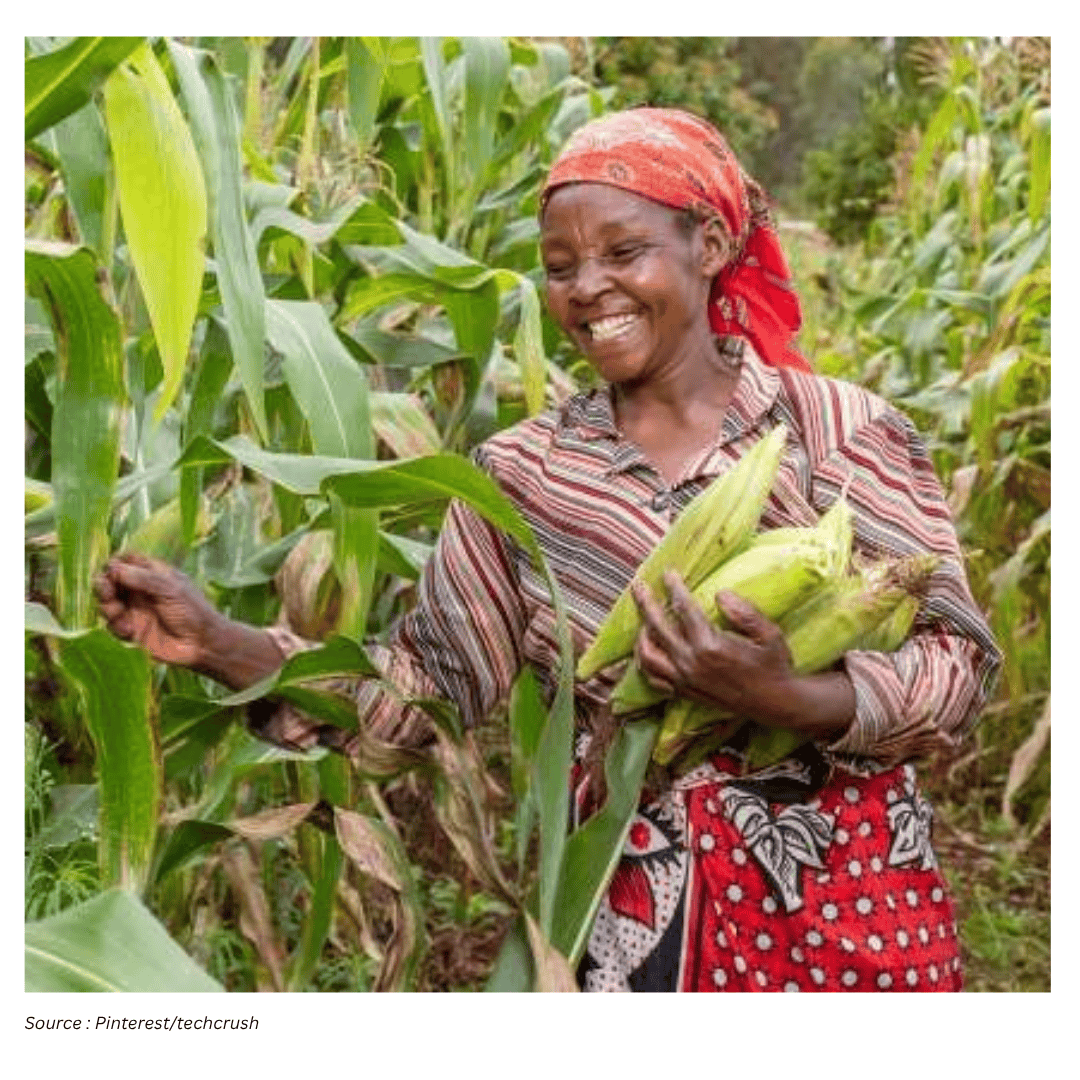
Across Africa, small-scale farmers and pastoralists are confronting a harsher reality: storms, droughts, floods and heatwaves are increasingly capable of wiping out a season’s work in a matter of days. Farming livelihoods that depend on rainfall are especially exposed. As weather becomes less predictable, farmers face not only direct losses of crops and livestock, but also a quieter, longer-term drag on income: the fear of a bad season can discourage investment in seeds, fertiliser, irrigation or other improvements that might raise productivity.
Economists Berber Kramer and Ruth Vargas Hill, writing in a policy note aimed at the world’s largest economies, argue that this combination of rising climate risk and low insurance coverage is a central challenge for African agriculture. They point to an uncomfortable imbalance: globally, nearly one in five people are at risk of facing a severe weather event they will struggle to recover from, but in Africa that figure is two in every five people. Yet only a small share of African farmers are insured against weather shocks.
The result is a protection gap that leaves millions of farmers, pastoralists, and small and medium agricultural businesses exposed to losses that could wipe out their livelihoods. The policy note sets out steps that a major international economic forum could take to help scale affordable agricultural insurance on the continent—especially insurance models that use technology to reduce costs and improve accuracy.
Why traditional agricultural insurance often fails smallholders
Insurance can, in principle, help farmers recover after bad seasons and encourage them to invest despite uncertainty. In practice, insurers often struggle to serve smallholders. A core reason is cost. For many providers, the expense of marketing policies, signing up clients, and verifying losses can exceed the value of the cover that smallholders are able to buy. When premiums are small and farms are dispersed, administrative costs can dominate.
Insurers also face information problems. It can be difficult to assess an individual farmer’s risk, and to observe what steps that farmer has taken to prevent or limit damage. These challenges can make insurers reluctant to offer coverage, or can push them toward products that trade accuracy for affordability.
Index-based insurance: the main option—and its central weakness
Where agricultural insurance does exist for smallholders, index-based insurance is often the primary model. Instead of checking conditions on every individual farm, index insurance uses general data to estimate losses for an area. That data might include rainfall measured at nearby weather stations, vegetation measured by satellite images, or average crop yields in a region.
This approach has a clear advantage: it is cheaper to run. Because payouts are triggered by an index rather than farm-level inspections, insurers can reduce verification costs and extend coverage to more clients. Index insurance also avoids relying on a farmer’s individual effort to prevent damage, which can help keep costs lower.
But index insurance has a well-known problem: basis risk. Basis risk is the mismatch between what the index indicates and what actually happened on a particular farm. A farmer’s crops may be destroyed while the index suggests the region was not damaged, resulting in no payout. Or the index may trigger a payout even though a farmer’s crops are fine. Either way, the gap between compensation and real losses can undermine trust and reduce uptake.
Another challenge is understanding. When insurance is bundled with other products—such as credit or fertiliser—some farmers may not realise they are insured or may not know what they are entitled to when a shock hits. That lack of clarity can weaken the value of insurance even when it exists on paper.
Newer models aim to make insurance both cheaper and more credible
The policy note highlights several innovative forms of agricultural insurance that could be rolled out more widely across Africa. The common thread is an attempt to address the twin barriers of cost and credibility—keeping insurance affordable while improving the match between payouts and actual losses, and making products easier to understand and use.
Insurance coupons: These are designed to let farmers “mix and match” coverage for specific risks and time windows. A farmer, for example, could buy insurance that pays out if rainfall drops below a certain level over a two-week period—precisely when crops most need water. The idea is to allow farmers to tailor protection to known vulnerable periods rather than paying for broad coverage that may not fit their needs.
Informal insurance networks: Many communities already participate in mutual aid groups, such as funeral groups, where members support one another in times of distress. The proposal is to expand or replicate such networks for farmers, pooling money that can be used when a member’s crops are damaged by weather. This approach builds on existing social structures that people may already trust.
Picture-based insurance: This model uses smartphone photos to assess crop damage remotely and support claims. The aim is to combine the affordability of index insurance with the accuracy of indemnity insurance (which pays based on observed losses). If implemented well, smartphone-based verification could reduce basis risk and increase farmers’ willingness to buy coverage.
Gender-based insurance: The note also points to insurance products that directly address risks faced by women farmers. While the policy note does not detail specific features, the emphasis is that product design should reflect gendered realities in agriculture rather than assuming all farmers face identical constraints and exposures.
A real-world example: index livestock insurance for pastoralists
One example cited is the DRIVE programme operating in Djibouti, Ethiopia, Kenya and Somalia. Through this programme, pastoralists can access index-based livestock insurance. The programme is described as a US$360.5 million project funded by the World Bank and other organisations, with an aim to connect over 1.6 million pastoralists to insurance.
While index-based insurance carries basis risk, the programme illustrates how large-scale initiatives can expand access when funding and delivery mechanisms are aligned. It also shows how insurance can be designed for different agricultural livelihoods, including livestock herding, not only crop production.
What an international agenda could prioritise
The policy note argues that a major international economic forum should champion steps that make insurance markets work better for African smallholders, including measures that spread risk and strengthen product quality. Two proposals stand out.
First, continent-wide risk pooling. This means sharing risks across countries or regions to reduce the financial impact of localised shocks. When drought or flooding is concentrated in one area, a broader pool can help absorb losses more smoothly than a small, local pool.
Second, transfer policies for smallholder farmers. In practical terms, this means shifting risks to financial markets or third parties through mechanisms such as insurance and re-insurance. Re-insurance can help insurers manage large correlated losses when weather shocks affect many clients at once.
Improving product design: monitoring, technology partnerships, and regulatory learning
Scaling insurance is not only about adding more policies; it is also about ensuring those policies work. The policy note suggests several ways to promote better product design and delivery.
Monitor quality and performance: Establishing a body to track how well different insurance policies perform could help identify which products deliver reliable protection and which fall short. In markets where trust is fragile, transparent performance monitoring can be as important as pricing.
Support technology partnerships, including AI: The note calls for partnerships that use technology to improve insurance design and delivery. While the details are not spelled out, the direction is clear: digital tools can reduce administrative costs, speed up processes, and potentially improve how risk is assessed.
Encourage collaboration between insurers and regulators: Sharing lessons about what works best can help markets mature. Regulation can protect consumers, but it can also enable innovation when rules are clear and aligned with real-world delivery constraints.
Bundling insurance with credit and inputs: a pathway to wider uptake
One practical approach emphasised in the policy note is bundling insurance with products farmers already use—such as credit and farm inputs like seeds and irrigation. The argument is that these combinations can make insurance more attractive and easier to distribute.
Examples are cited from Malawi and Ethiopia, where farmers who take out agricultural loans or buy fertiliser from certain companies automatically receive crop insurance. Bundling can reduce marketing and enrolment costs for insurers, and it can ensure that farmers have some level of protection when they take on financial commitments such as loans.
However, bundling also raises a communication challenge already noted: when insurance is included automatically, farmers may not realise they are covered or may not understand how payouts work. That makes transparency and farmer education central to the success of bundled models.
The role of public funding—and the need to test what works
Public funding can help grow insurance programmes, but the policy note is cautious about subsidies. It states that it is not yet clear which subsidies work best, who benefits, or whether they are worth the cost. This uncertainty matters because subsidies can shape markets for years, influencing which products survive and who gets access.
The recommended response is more evidence: testing what works, sharing ideas on better ways to spend public money, and working with insurers to evaluate which programmes are effective. In other words, scaling should not outrun learning. If the goal is affordable, fair insurance that farmers trust, then programme design needs feedback loops that measure real performance, not just enrolment numbers.
Insurance as support, not a substitute for adaptation
The policy note also underscores a boundary: insurance should support practical steps to reduce risk, not replace them. Farmers still need drought-resistant crops, conservation farming, and better weather information. Insurance can help households recover after shocks and can encourage investment, but it cannot prevent droughts or floods.
As climate shocks increase, the challenge is to build insurance that is simple enough to use, fair enough to trust, and accurate enough to pay when it matters. The innovations highlighted—smartphone-based damage assessment, flexible coupon-style coverage, stronger risk pooling, and better product monitoring—are presented as tools to move closer to that goal for Africa’s smallholders and pastoralists.