
New Zealand’s Growing Insurance Squeeze: When Natural-Disaster Risk Makes Homes Hard to Cover
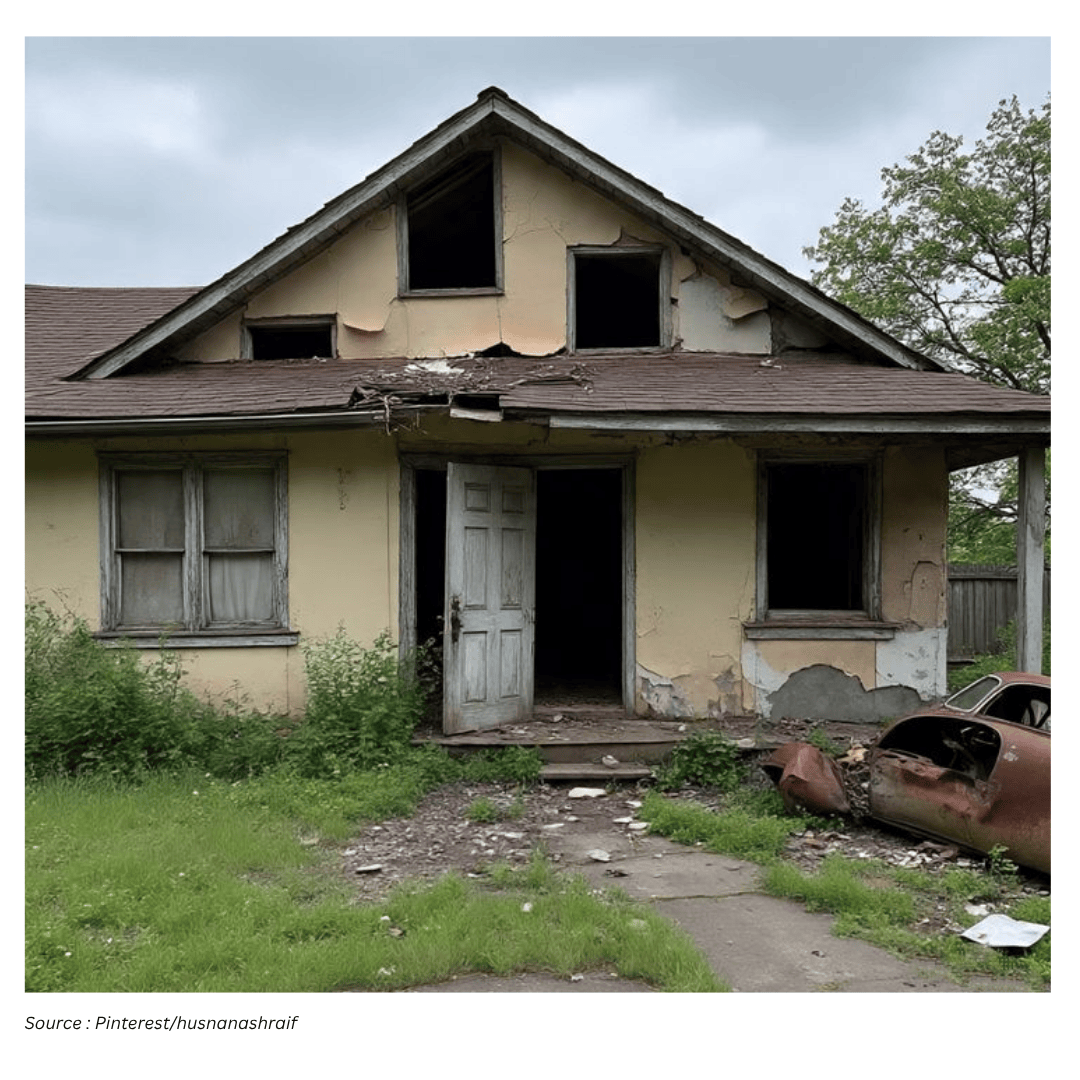
A changing reality for homeowners
For many New Zealanders, home insurance has long been treated as a standard part of owning property. But after a run of significant natural disasters—from the Canterbury earthquakes to Cyclone Gabrielle—confidence in the availability of cover is being tested. In some locations, homeowners are discovering that insurance is becoming difficult to obtain, or effectively unavailable, because insurers view the risk as too high to cover on terms that remain financially viable.
This emerging pressure raises a practical question with wide consequences: how can insurers continue to offer home policies while managing the growing risk of natural-disaster damage? The issue is no longer abstract. When cover is hard to secure, homeowners can be left exposed. And because insurance is often tied to lending, difficulties in obtaining cover can affect more than just the annual premium—it can shape whether a household can borrow, refinance, or maintain financial stability after an event.
Insurers, regulators, and policymakers are now facing an uncomfortable balancing act: maintaining access to insurance while ensuring the system remains sustainable in the face of increasing disaster risk. The path forward is likely to require innovation in policy design and risk-sharing, alongside coordinated efforts between the public and private sectors.
Insurance is not automatically guaranteed
A key point in the New Zealand context is that there is no general requirement that insurers must cover everyone’s home, nor a general legal requirement that every home must be insured. That means insurers can decide, based on their assessment of risk and viability, whether to offer cover and on what terms.
There are, however, important exceptions and practical pressures that shape how the market operates:
Body-corporate groups must insure the units they manage, which creates a clear obligation for multi-unit developments under body corporate arrangements.
Mortgage lenders may require borrowers to take out home insurance as part of lending conditions, effectively making insurance a prerequisite for many homeowners with a mortgage.
These features mean that even if insurance is not legally mandatory for every homeowner, it can be functionally essential for many households. When insurers withdraw from areas they view as “high risk”, the consequences can ripple outward—affecting not only those seeking new cover, but also those trying to maintain existing arrangements.
The public natural-hazards layer built into home insurance
New Zealand’s home insurance landscape is also shaped by a public natural-disaster scheme. When homeowners take out home insurance, the risk of certain losses from natural disasters is automatically covered by the Natural Hazards Commission (previously known as the Earthquake Commission).
This structure has several implications. Even if a home insurance policy were drafted in a way that appears to exclude this public natural-disaster cover, the law would treat the cover as included. In other words, the public layer is embedded in the system in a way that cannot simply be opted out of through policy wording.
At the same time, there is a crucial distinction between who manages payouts and who finances them. While payouts are managed by insurers, they are not financed by insurers. This separation matters when considering how risk is allocated across the system and why insurers may still be cautious even with a public component in place.
Why insurers are pulling back from high-risk areas
The cost of major disasters provides a stark backdrop to insurers’ decisions. The Canterbury earthquakes alone cost insurers NZ$21 billion, while the Natural Hazards Commission cost $10 billion. Those figures illustrate why insurers may become more conservative as they try to remain viable under large, correlated losses.
As the broader risk of natural disasters grows, insurers may be increasingly reluctant to offer cover in areas they consider “high risk”. In practice, this can translate into reduced availability of policies, tighter terms, higher premiums, or more restrictive conditions for homeowners in exposed locations.
From a homeowner’s perspective, the experience may look like a simple market outcome: fewer options and higher costs. From an insurer’s perspective, it can be a response to the scale of potential losses and the challenge of pricing risk in a way that remains sustainable.
A regulatory shift: the duty to treat consumers fairly
From mid-2025, insurers will have a general duty to “treat consumers fairly”. This change introduces a new and potentially significant factor into how the market develops. The Financial Markets Authority, which is responsible for enforcing financial-markets law, may potentially regard refusing home insurance to any consumer as a breach of the duty.
If that interpretation is applied in practice, the effect could be substantial: the Financial Markets Authority may end up forcing insurers to cover most of the country’s homes. That possibility creates a tension between two goals:
Consumer access: ensuring people can obtain essential financial products, including home insurance.
Risk sustainability: ensuring insurers can manage exposure to large-scale disaster losses without making cover financially unworkable.
How this duty is interpreted and enforced will likely shape the next stage of the debate. It also underscores why insurers may need to explore alternative models rather than relying on traditional approaches that assume stable, predictable risk.
Innovation in policy design: incentives, caps, and tailored terms
One set of potential solutions focuses on how insurers take on risk in the first place. Rather than offering a one-size-fits-all product, insurers may increasingly use policy design to encourage risk reduction and to limit exposure where risk remains high.
Examples of approaches insurers may adopt include:
Premium incentives for risk reduction: an insurer may decrease premiums as an incentive for a homeowner to “disaster-proof” a property.
Higher costs and tighter terms when risk is not reduced: if a homeowner does not take steps to reduce risk, an insurer may increase premiums and limit payouts, including through individualised excesses or caps.
These tools reflect an attempt to align behaviour and pricing: rewarding steps that reduce potential loss, and restricting exposure where risk remains elevated. For homeowners, the trade-off may be clearer than in the past: improved resilience could be directly linked to affordability and availability of cover.
Parametric insurance: faster payouts with predefined triggers
Another option that may become more prominent is “parametric” insurance. Unlike traditional insurance, which pays out based on the assessed value of the loss, parametric insurance pays a pre-agreed sum when a defined event occurs.
Consider one example used to illustrate how it could work: a home insurance policy that covers any earthquake having its epicentre within 500 kilometres of a home, and measuring magnitude six or higher. Under a traditional policy, the payout would depend on how much loss was caused, typically assessed by a loss adjuster. Under a parametric policy, the payout would be a smaller, pre-agreed amount triggered by the earthquake’s occurrence under the defined parameters.
One practical feature of parametric insurance is that it would not require the homeowner to prove actual “loss”, beyond the inconvenience of having a home in the disaster zone. While parametric insurance is relatively new worldwide, it is described as an efficient solution for managing the risk of natural-disaster damage—particularly where speed and certainty of payment are valued, even if the payout is less than what a traditional policy might provide for major damage.
Sharing and transferring risk: reinsurance and co-insurance
Innovation is not limited to the wording of policies. It can also involve how insurers distribute risk across the market. Two established mechanisms are reinsurance and co-insurance.
Reinsurance is where an insurer transfers part of its risk to another insurance business, known as a reinsurer. If the insurer has to make a payout to a customer for a claim, the reinsurer then makes a payout to the insurer for a portion of it. This arrangement can help insurers manage exposure to large losses, particularly from major disasters.
Co-insurance is where two or more insurers cover different portions of the same risk. For a homeowner, that could mean having multiple insurers involved, each responsible for a portion of any claim. In theory, this can spread risk and make it easier for any single insurer to participate in covering a property that might otherwise be considered too exposed.
Beyond traditional insurance: catastrophe bonds
Risk can also be transferred to entities that are not insurance businesses. In some countries—such as Bermuda, the Cayman Islands and Ireland—insurers can convert risk into a “catastrophe bond” (also known as a “cat bond”).
Under a cat bond, an insurer arranges for expert investors to lend capital in return for interest on the loans. The insurer eventually repays the capital unless there is a specific natural disaster. If that disaster occurs, the insurer keeps the capital, enabling it to pay out to affected customers.
This approach can also be used to create what is described as a “virtuous cycle”. More specifically, the insurer may reinvest the capital in “a project that reduces or prevents loss from the insured climate-related risk” such as flooding. The logic is that investment in risk reduction could, over time, reduce the severity or frequency of losses, supporting the long-term availability of cover.
Why public-private coordination matters
Even with new product designs and risk-transfer tools, future-proofing home insurance options is framed as a task that depends on the public and private sectors working together. Private insurers can adjust pricing, offer new types of cover, and share risk in different ways. But reducing the underlying level of risk—so that insurance remains viable—requires broader action.
The Intergovernmental Panel on Climate Change has advised on how sectors could minimise climate-related risk. Alongside climate-related hazards, there is also a need to minimise the risk of natural-disaster damage more generally, particularly from earthquakes. The implication is that insurance cannot be treated as a standalone fix; it is one part of a wider resilience challenge.
Building resilience: disaster-proofing and the housing-cost problem
Two related themes stand out in discussions about improving the situation: strengthening homes and confronting the financial pressure created by housing costs.
First, it is important to build homes that are better disaster-proofed. This aligns with the idea that insurers may use pricing incentives to encourage resilience measures, and that risk reduction can support the long-term sustainability of cover.
Second, there is a broader issue that is not always viewed as connected to insurance: the cost of housing. The argument is that if New Zealanders wishing to own their homes did not have to invest as much of their money in housing as they do, the risk of damage to housing might be of less concern. In that scenario, a natural disaster would not have to mean financial disaster to the same extent it can today.
This perspective does not remove the need for insurance, but it reframes the stakes. When households are financially stretched by the cost of housing, any disruption—especially a major disaster—can become harder to absorb. That reality increases the importance of workable insurance options and of broader measures that reduce vulnerability.
What the future may look like
The direction of travel is clear: innovative insurance options will become more and more necessary. In practice, that may mean a market where traditional comprehensive policies are not the only model, and where homeowners see more variation in terms, triggers, excesses, caps, and the number of parties sharing the risk.
It may also mean that the relationship between household resilience and insurance affordability becomes more explicit. If insurers increasingly use incentives and tailored pricing, homeowners could face stronger signals to invest in disaster-proofing—while those unable to do so may encounter higher costs or more limited cover.
At the same time, the upcoming duty to treat consumers fairly introduces an additional layer of complexity. If refusing cover is viewed as inconsistent with that duty, insurers may need to find ways to offer policies even in higher-risk contexts, potentially relying more heavily on alternative structures such as parametric products, co-insurance, reinsurance, or risk-transfer instruments like catastrophe bonds.
Ultimately, the challenge is not only about keeping insurance available today, but about ensuring the system can operate in a future where natural-disaster risk remains a defining feature of the housing landscape. The choices made by insurers, regulators, and policymakers—along with the steps taken to reduce underlying risk—will determine whether homes that are currently on the edge of insurability can remain protected in the years ahead.